

Brighton has always had a particular relationship with independent retail. Its shops often feel like extensions of the people behind them, shaped by their interests, obsessions and the communities that form around them. The Loser Store is a good example of this, bringing together vintage clothing, pop culture, skate, and surf influences with a distinctly personal point of view.
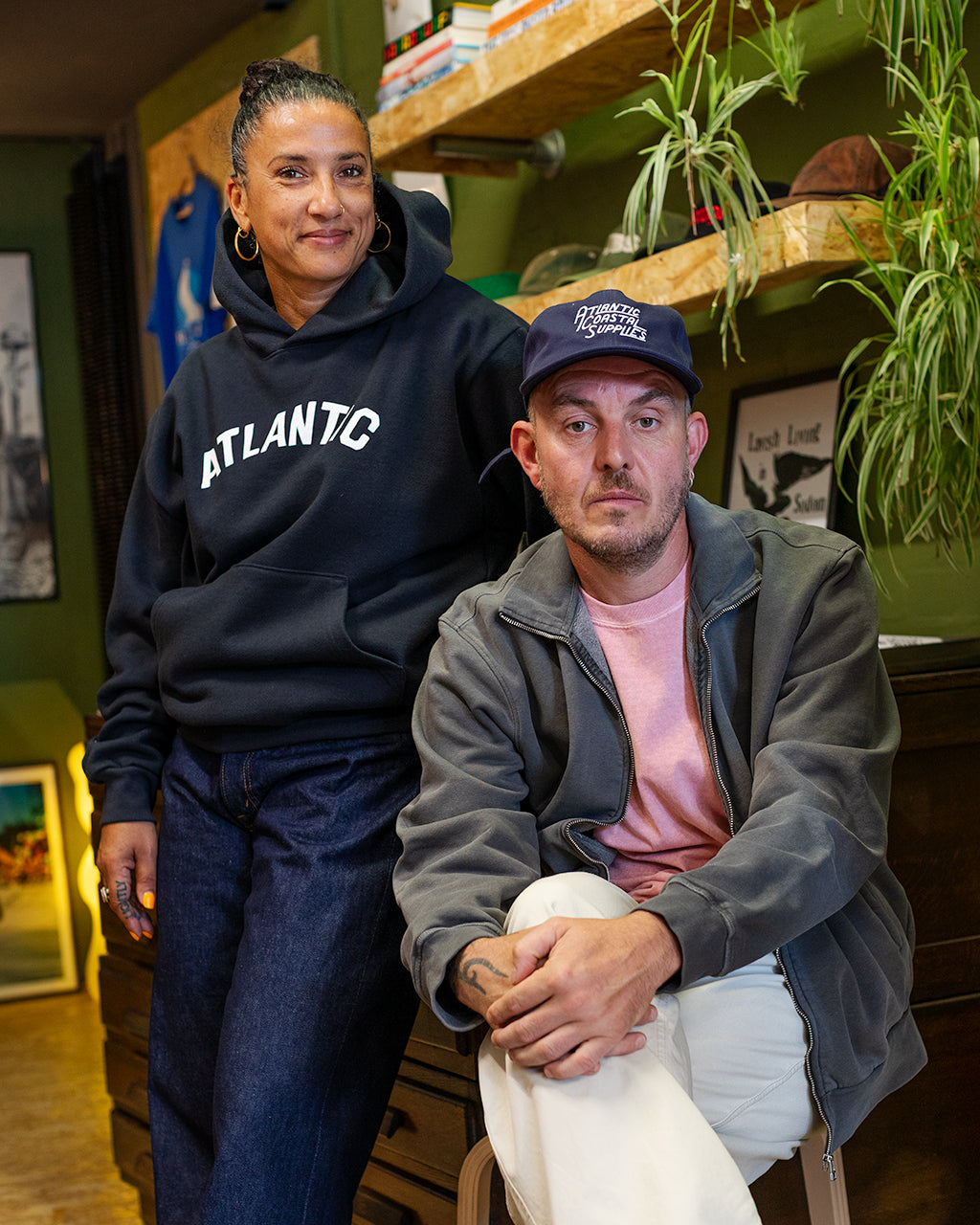
Founded by Stew and Shanthi, The Loser Store has grown into a space that goes beyond simply buying and selling vintage. Their approach to sourcing, styling and building the shop reflects a wider interest in clothing and the culture surrounding it, while their growing collection of collaborations and new product adds another layer to the mix.
For this instalment of Friends of Peggs, we spent the morning with Stew and Shanthi at The Loser Store, talking about the realities of running an independent shop, the influence of Brighton, where their taste comes from and what keeps them excited about clothing.
Peggs & son: Loser Store feels quite fully formed as an idea - but what did it actually start as in your head? Was it always this, or did it take a few wrong turns to get here?
The Loser Store: It definitely evolved. The name actually came first, on a night out Stew had in the pub with a mate. It was the American sense of "loser" that appealed - the slackers, outsiders and people on the margins - with Beck's 1994 Loser inevitably in there too.
The starting point for the shop was quite simple: really good vintage that we actually wanted to own ourselves, alongside selected new brands making strong graphic T-shirts. We were never interested in filling rails for the sake of it, or buying huge amounts of generic vintage. There was always supposed to be a strong edit.
As we've gone along, Loser has become less about "vintage" as a category and more about the world around it: skate, surf, music, film, graphics, art, subcultures, photography, books and things with some kind of cultural weight to them. There is a deliberate clash between high and low culture in the shop, and between old material culture and new things that speak the same language.
We loved our original space in the mews in Hove, but moving to St Peter's Yard behind London Road gave us the opportunity to expand both the stock and the idea of what the shop could be. We've hosted collaborations, launches and in-store pop-ups, with plenty more in the pipeline. We want it to be somewhere customers spend time, rather than somewhere they come in for a quick flick through the rails.
-
P&S: Stew, you spent some time at Peggs & son. back in 2009-2010 - what do you actually remember about that period now? And are there any ways it still shows up in how you run Loser Store today?
The Loser Store: The thing that has probably stayed with me is the value of having a really clear point of view. Peggs wasn't trying to sell everything to everyone. There was a strong edit, good product, good brands and a particular way of presenting it. That idea definitely carries through to Loser. We're very different shops, but the principle is similar: you should be able to walk into a shop and understand what it is without somebody having to explain it to you. The buying, music, books, graphics, merchandising and people behind the counter should all feel like part of the same thing.
-
P&S: There are easier ways to run a shop than dealing in vintage - so why this? What is it about vintage that still holds your attention?
The Loser Store: It sounds like a cliché, but there really is a story attached to every good piece. Vintage is material culture that you can own and wear. It might be the graphic, the fabric, the way something has faded, its construction, who made it, the era it came from, or what was happening culturally around it.
With new clothing, if something sells you can often order another one. With vintage, once it has gone, it has gone. There is a specificity to each piece that makes buying much more interesting.
We also like setting that material history alongside newer product that encapsulates the same things we're interested in - music, film, art, graphics and the collision between high and low culture. The shop is constantly changing as a result. Even we don't completely know what it will look like in a month's time.


P&S: There’s a really clear thread through what you buy - pop culture, skate, surf, music. Where does that come from for you? Is it nostalgia, instinct, or something else?
The Loser Store: Probably all three, but nostalgia alone isn't enough. Something being old doesn't automatically make it interesting. A lot of what we buy comes from things we've been around or interested in for years - skateboarding, music, graphics, film, surf culture, streetwear and the crossover between all of those things. So there is an instinctive response to certain objects and references. But the shop isn't supposed to be a museum of our adolescence. Someone can find a twenty or thirty-year-old t-shirt because the graphic is brilliant without caring what it meant when it was first made. The best pieces work on both levels.
T-shirts are probably the clearest expression of all of that for us. We’re both slightly obsessive about them - the graphics, the print, the blanks, the provenance, the way they age and the cultural references they carry. Above all, we want Loser to be known as a great t-shirt shop. Vintage band tees, bootlegs, skate and pop culture pieces sit at the heart of what we buy, and increasingly the new brands and collaborations do too.
-
P&S: How much does being in Brighton shape what Loser Store is? Do you think the shop would look or feel different anywhere else?
The Loser Store: Massively. Brighton has always had this overlap between music, skateboarding, fashion, art, nightlife and people making their own things. There is also a long history of independent shops here, so people understand the idea of going somewhere because the people behind it have made a particular edit.
Moving from Hove into St Peter's Yard has had a big impact. We're close to the North Laine and The Level without being right in the middle of the obvious vintage shopping circuit, which means we get a real mixture of people rather than only customers who have specifically gone out to shop for vintage. St Peter's Yard itself is becoming a proper little community. We have The Hive Gym, Willie's Phillys, 4DM music studio and now Electric Cowgirl Tattoo Studio alongside us, and there is a really good crossover between the customer bases. It gives the whole place an energy that we didn't have before.
-
P&S: Where does the hunt actually happen for you these days? And has that changed since you first started?
The Loser Store: Everywhere, really. Dealers, markets, contacts, people bringing things into the shop, online, collections and random individual finds. What has changed is that you get much better at filtering. At the beginning you can be excited simply because something is old or unusual. After handling thousands of pieces, the bar gets higher. There are also two of us, so buying can involve a bit of negotiation. We don't always instinctively choose exactly the same things, and that slightly different mix is useful. Together we can be bolder and braver with what we buy than either of us might be alone.
The hardest part now isn't finding vintage. There is vintage everywhere. It is finding the things that feel right for Loser.


P&S: What’s the bit of running a vintage store that people probably don’t see - either the harder side of it, or the part that keeps it interesting for you?
The Loser Store: The amount of work between finding something and putting it on a rail. Everything has to be sourced individually, checked, researched, cleaned, sometimes repaired, measured, photographed, priced and then somehow organised into a shop that still feels coherent. Then there is the entire additional job of marketing it, feeding social media, photographing products and getting things online.
Stew also produces customised and reworked garments, and those involve a huge amount of physical input. They are very far from simply buying something and putting a price tag on it.
There is no clean supply chain. You can't just reorder your best seller in three sizes. But that is also what keeps it interesting. You can open a bag or go through a collection and suddenly find something you haven't seen for years, or something you have never seen before.
-
P&S: Who do you picture when you’re buying? Has that person changed over time, or surprised you at all?
The Loser Store: Our customer base is incredibly varied in age, style and gender, so there isn't one Loser customer we are buying for. Stew does have one fairly specific person in mind when he is buying hats and T-shirts: Henry, who works on the shop floor with us and appears in a lot of our social posts. He skates and has some of the best taste in obscure vintage tees and hats of anyone we know. If Henry would wear it, that's often a pretty good test.
But one of the most interesting things about the shop is watching completely different people respond to the same object for different reasons. Someone might recognise a t-shirt because they had one first time around, while somebody else who wasn't born when it was made just thinks it looks incredible.
-
P&S: You’ve started introducing new pieces and collaborations alongside vintage - what makes something earn its place next to older product?
The Loser Store: It has to feel like it belongs in the same conversation. We're not interested in adding new product just because it gives us something easier to reorder. It needs a strong graphic idea, a good story, a relationship to the people or culture around the shop, or simply to be something we really want ourselves. Collaborations are particularly interesting because they allow Loser Store to become a producer rather than only a reseller. We're just about to launch Filthy Loser, a collaboration with our friend Joe at Filthy Media. The first two collections are based around The Sopranos and La Haine, both firm store favourites. It is exactly the sort of thing that makes sense alongside the vintage because it comes from the same set of cultural references. The distinction isn't really old versus new. It is interesting versus generic.
-
P&S: Brighton’s always had a strong independent scene - from your perspective, what makes a good independent shop actually work in 2026?
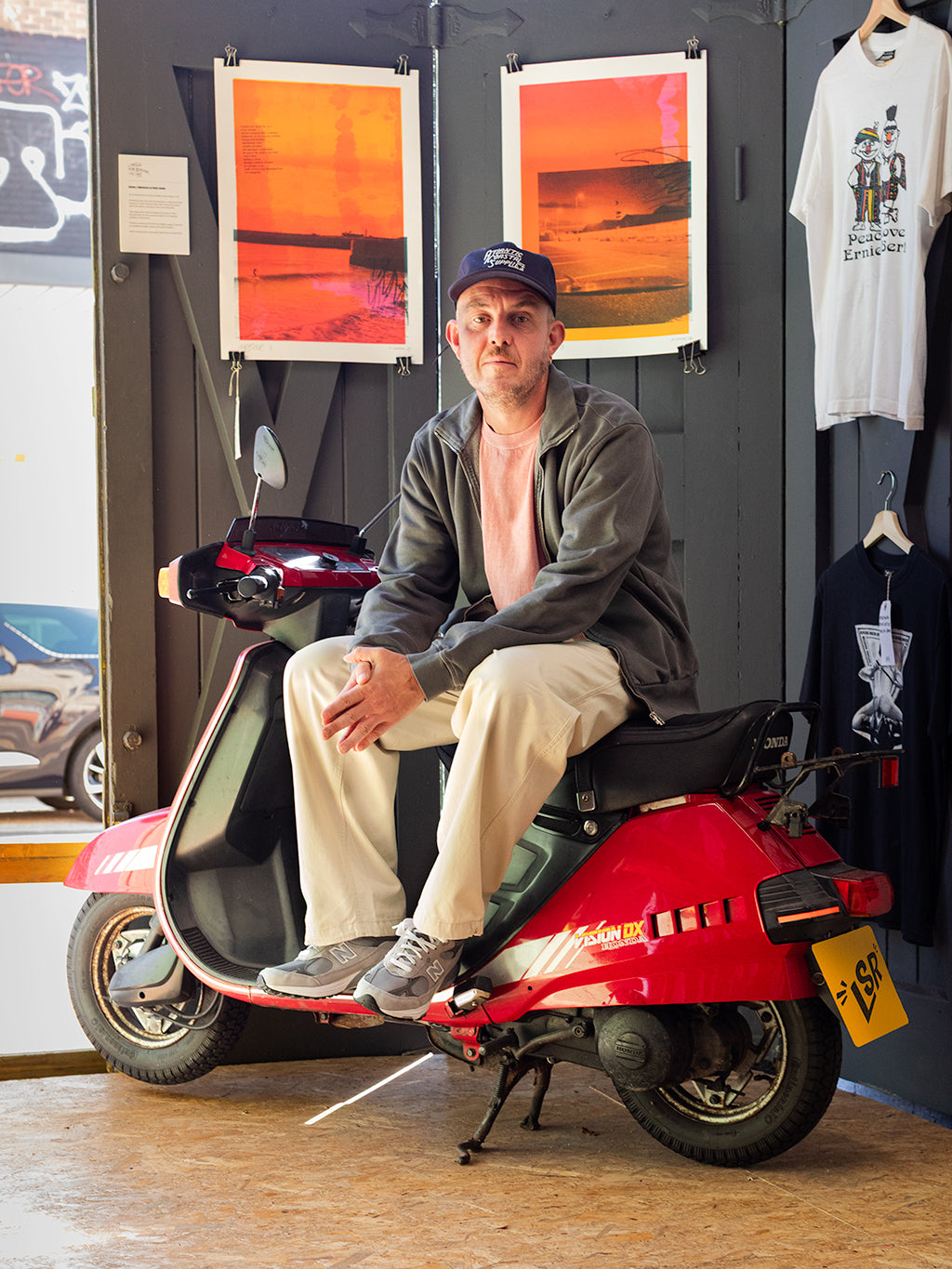
The Loser Store: A reason to exist. There is almost nothing you genuinely need to visit a physical shop to buy anymore. So if an independent shop is just a less convenient version of the internet, there isn't much argument for it. The good ones have personality, knowledge and a clear edit. They introduce you to things you didn't know you wanted. You build a relationship with them. For us, that also means making the physical space do more than retail. We've hosted collaborations, pop-ups and launches, and this Saturday we're launching an exhibition of work by local food photographer Ellis Parrinder. There are more events and collaborations in the pipeline.
We want customers to spend time in Loser, not just walk in, flick through a rail and leave. And commercially, you have to be much less romantic about it. Rent, staffing and stock cost money. A good independent shop now needs the physical store, online, social media, events and collaborations all working together.


P&S: What keeps you invested in this? Not just clothing, but running a physical shop, here, now - what’s the pull?
The Loser Store: The physical shop is the interesting part. Seeing somebody discover something on a rail is completely different from watching an online order come through. People come in, talk, bring things, recommend music, tell you stories about the clothes and introduce you to other people. Since moving into St Peter's Yard, that has expanded beyond the shop itself. There is a community forming around the businesses here, and customers move between us. That makes the physical location important in a way an online store can't replicate.
Using the space for launches, exhibitions, DJs, collaborations and pop-ups is increasingly part of what we want Loser to be. The aim isn't simply to operate a retail unit. It is to build a place people want to return to and spend time in.
-
P&S: What do you think someone gets from Loser Store that they wouldn’t get from a bigger retailer or a more generic vintage shop?
The Loser Store: An edit. There are plenty of places where you can buy vintage by the kilo or walk through hundreds of almost interchangeable sweatshirts. That isn't what we're trying to do.
Everything in Loser has been chosen by one or both of us. There is a reason it’s there. And because we mix vintage with books, art, photography, customised garments and selected new brands, you can come in looking for one thing and end up finding something completely different: an obscure band T-shirt, an old skate piece, a photograph, a strange bit of outerwear, a book or a new graphic tee. The shop reflects our interests rather than a category buying plan.
-
P&S: What’s the best thing you’ve picked up recently that you almost didn’t put out on the shop floor?
The Loser Store: We both have this problem. One of the staples of the shop is 90s band bootlegs, and Stew always finds it particularly difficult to let the rare Sonic Youth ones make it onto the floor. Shanthi currently has her eye on a 90s French Chicago Bulls T-shirt. If nobody buys it, there's a fairly strong chance she'll be wearing it by the weekend. Usually, wanting to keep something is a good indication that we should put it straight out for sale.
-
P&S: If someone was spending a day in Brighton and wanted to get a real sense of the independent scene, where should they be going?
The Loser Store: Don't treat Brighton like one shopping street. Kensington Gardens is still one of the best places to start, but wander beyond it through the North Laine rather than only doing the main routes. Starfish, Family Store and Dowse are all worth visiting. There are good places all over the city. The point is to wander a bit.
-
P&S: Are there any other independent businesses - in Brighton or elsewhere that you think are doing things properly at the moment?
The Loser Store: The places we respond to are generally the ones where you can see the people behind the business in what they sell and how they do things. We love Dover Street Market and Goodhood. They both understand that a great shop is about much more than clothes. It is the mix of clothing with books, objects, art and other lifestyle pieces, all brought together through a really strong point of view.
There is a clear identity that people can understand and buy into, even when the individual things being sold are really varied. That mix of culture, retail and lifestyle is something that definitely informs how we think about Loser. The independents doing it properly tend to be the ones that feel culturally specific rather than generic. You know whose shop you're in.


P&S: What does the next year look like for Loser Store - anything you’re trying to push into or do differently?
The Loser Store: The biggest priority is making the different parts of Loser work together properly. The physical shop has grown enormously since the move from Hove, but there is much more we can do online. We want the website to represent the depth of what is actually in the shop rather than being secondary to it.
We're also developing more of our own product and collaborations. Filthy Loser is launching over the next few weeks, we're working on more limited-run and own brand pieces, and Stew's customised garments will continue to be an important part of what
we do.
We also want to keep developing the shop as a cultural space through exhibitions, launches, pop-ups and collaborations. The Ellis Parrinder exhibition is the next one, but there is more in the pipeline. The idea is to grow what Loser can be without losing the thing at the centre of it: finding brilliant stuff and putting it together in a way that feels like us.
-
P&S: Has running the shop changed your relationship with clothing at all?
The Loser Store: It has probably made us more selective. Once you are surrounded by clothes every day, sheer quantity becomes much less impressive. You start caring more about why something exists, how it was made, the graphic, the fabric, its cultural context and whether it has any real character. It also makes you very aware of how much clothing already exists in the world. That is part of what we love about vintage. These things already exist, but they continue accumulating meaning as they move between people. They are pieces of material culture rather than simply old clothes.
-
P&S: What’s something you’re into at the moment outside of the shop? Music, films, places, whatever.
Stew: Jimmy Eat World, particularly Bleed American from 2001. Jaws, and pretty much anything early Spielberg. Work, inevitably. And experimenting with over-dyeing and sun-fading T-shirts, which has become a total obsession in itself. If I get anytime to
read…. anything Hemingway.
Shanthi: Musically, a pretty constant rotation of Mos Def and MF DOOM in all his various guises. Rewatching Darren Aronofsky's Pi - I saw this film in a completely empty matinee showing when it came out and for some reason it firmly lodged itself! Reading James Baldwin's Giovanni's Room. The Barbican, always.
-
P&S: Anything else you think is worth mentioning that we haven’t covered?
The Loser Store: Probably the meaning of the name, because "Loser" isn't meant cynically. It came out of that American idea of the loser as the slacker, outsider or person on the margins rather than somebody who has failed, with Beck's Loser as an obvious reference point.
That still describes a lot of what interests us. Subcultures, bootlegs, odd references, independent makers, old graphics, cult films, art, music and objects that sit a little outside the mainstream.
There is something quite liberating about not trying to build a shop that everybody will like. We are definitely not for everyone. But when somebody walks in and immediately understands it, that's enough.


The Loser Store Edit